

Michael D'Elicio

Earnouts business sale

Earnouts Explained: When They Make Sense and How to Structure Them

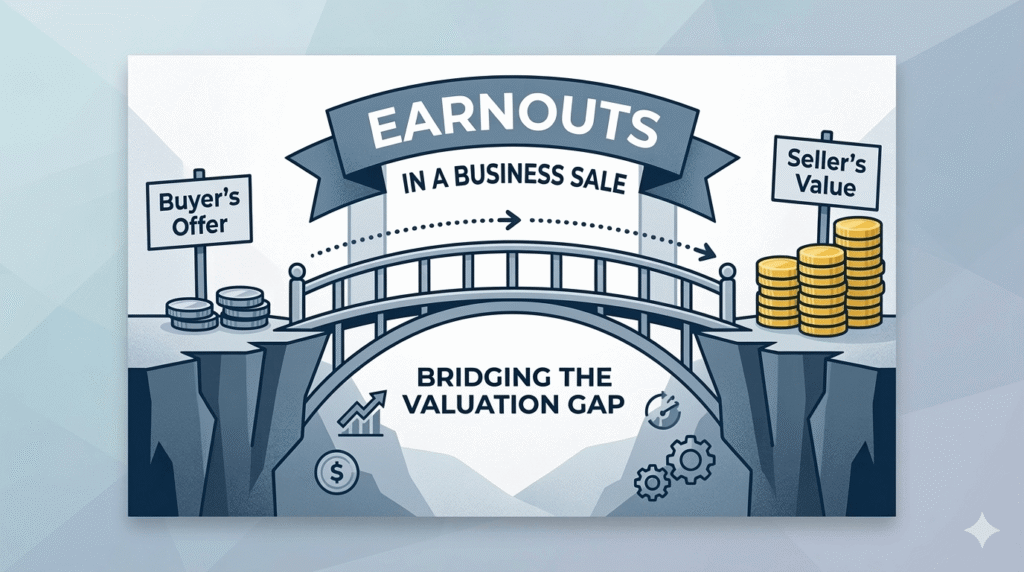
Earnouts are often introduced in transactions to bridge valuation gaps. When buyers and sellers see future performance differently, an earnout can create flexibility. A portion of the purchase price is paid at closing, and an additional portion is tied to measurable performance targets after the transaction closes. This structure allows both parties to move forward […]

Earnouts Explained: When They Make Sense and How to Structure Them Read More »

Navigating the Letter of Intent (LOI): What Every Seller Should Know Before Signing

Most business owners think the “deal” starts when they agree on a price. In reality, the deal begins when a buyer puts the terms in writing, typically in the Letter of Intent (LOI). An LOI can feel like a milestone: a serious buyer, a headline number, progress. But for sellers, it’s also a decision point,

Navigating the Letter of Intent (LOI): What Every Seller Should Know Before Signing Read More »

EBITDA vs. Seller’s Discretionary Earnings (SDE): Which Matters More When Selling Your Business

When it’s time to sell your business, one of the first questions buyers ask is simple: How much money does it really make? The answer isn’t always straightforward. Business buyers measure profitability in a few different ways, and two of the most important metrics you’ll hear are EBITDA and Seller’s Discretionary Earnings (SDE). Both EBITDA

EBITDA vs. Seller’s Discretionary Earnings (SDE): Which Matters More When Selling Your Business Read More »

Optimizing Your SaaS Financial Stack Before an Exit: GAAP, Cash Flow, and Forecasting

Strong SaaS metrics, such as ARR and NRR, are critical when preparing to sell, but buyers look well beyond topline numbers. They expect a financial foundation that is accurate, transparent, and easy to evaluate. A well-organized financial stack can significantly shorten due diligence and add meaningful dollars to your valuation. Here’s how to ensure your

Optimizing Your SaaS Financial Stack Before an Exit: GAAP, Cash Flow, and Forecasting Read More »

How SaaS Metrics Influence Valuation: ARR, Churn, and Net Revenue Retention Explained

When it comes to selling a SaaS business, valuation is far from a simple multiple of revenue. Investors and acquirers want to know not just how much you earn today, but also how predictable, durable, and scalable that revenue will be in the future. That’s why certain SaaS-specific metrics, particularly Annual Recurring Revenue (ARR), Churn,

How SaaS Metrics Influence Valuation: ARR, Churn, and Net Revenue Retention Explained Read More »

Business owner reviewing risks of first inbound offer when selling a company

Don’t Trust the First Inbound Offer to Buy Your SaaS Business – It Can Cost You Millions

“I already have a buyer.” I hear this all the time from software founders. And I get it. It feels like the hard part is over. Someone approached you directly (a buyer with an inbound offer), said they were interested, and, maybe, even praised your product. You’re flattered, they’re asking smart questions, and you’re thinking,

Don’t Trust the First Inbound Offer to Buy Your SaaS Business – It Can Cost You Millions Read More »

Business owner completing due diligence checklist before selling

What’s Involved in a Technical Due Diligence Process?

When preparing to sell a SaaS business, founders often prioritize financials and customer metrics, and rightfully so. Just as critical to a successful and timely sale, though, is the technical due diligence process. This comprehensive audit offers prospective buyers a detailed view into your technology stack, infrastructure, product development lifecycle, security posture, and more. Failing

What’s Involved in a Technical Due Diligence Process? Read More »