Insights for Advisors

Insights for CPAs, fractional CFOs, and professional advisors working with lower middle market SaaS and service businesses.

This section explores transaction dynamics, valuation frameworks, structural considerations, and real-world market behavior that influence outcomes in sales of $3M–$20M revenue companies.

Topics include the differences between financial valuations and market-clearing prices, risk underwriting in institutional transactions, discount rate implications, normalization adjustments, earnout structures, liquidity considerations, and factors that can make a business unsellable in today’s environment.

The focus is practical alignment — helping advisors frame expectations accurately before a sale process begins and reducing friction once live buyers enter the picture.

How Fast Can Your Business Really Grow

How Fast Can Your Business Really Grow? Understanding the Constraints on Growth

Business owners naturally want to grow. More customers, more revenue and a larger market presence usually signal that a company is moving in the right direction. But how fast can a business realistically grow? The answer is rarely determined by demand alone. At any point in time, one part of the business usually becomes the […]

How Fast Can Your Business Really Grow? Understanding the Constraints on Growth Read More »

Clean professional infographic titled “Is This Founder-Owned Software Company Ready for an Exit Process?” featuring five columns labeled Founder Readiness, Earnings Quality, Transferability, Buyer Story, and Diligence Readiness, with David Jacobs branding at the bottom.

How to Tell if a Founder-Owned Software Company Is Ready for an Exit Process

How CFO Firms, CPAs, and M&A Attorneys Can Recognize When a Founder-Owned Software Company Is Ready for an Exit Process When a founder-owned software company starts talking about a sale, the first question is usually valuation. That is understandable, but it is rarely the most important question at the start. The more important question is

How to Tell if a Founder-Owned Software Company Is Ready for an Exit Process Read More »

Earnouts business sale

Earnouts Explained: When They Make Sense and How to Structure Them

Earnouts are often introduced in transactions to bridge valuation gaps. When buyers and sellers see future performance differently, an earnout can create flexibility. A portion of the purchase price is paid at closing, and an additional portion is tied to measurable performance targets after the transaction closes. This structure allows both parties to move forward

Earnouts Explained: When They Make Sense and How to Structure Them Read More »

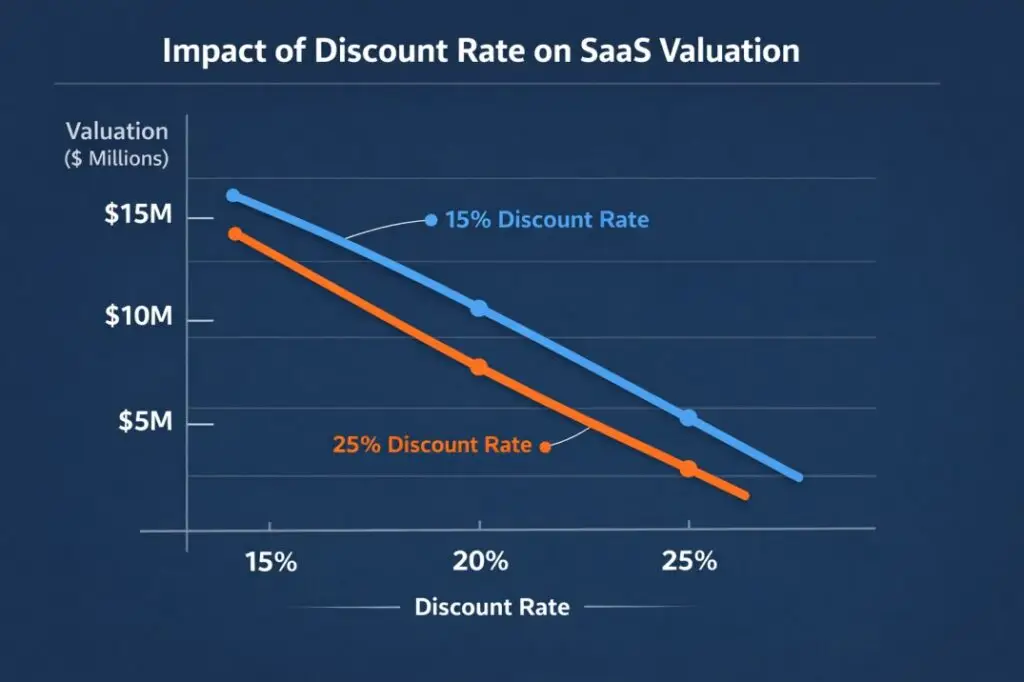
Impact of discount rate changes on lower middle market SaaS valuation using DCF analysis

From Spreadsheet to Wire Transfer: Why SaaS Transaction Prices Differ from Financial Valuations

In the $3–20M SaaS market, valuation tension rarely comes from bad math. More often, it comes from a shift in context. I’ve seen situations where a founder receives a thoughtful, well-supported valuation for planning or tax purposes.  Months later, when they begin exploring a sale, the live offers don’t match that earlier number.  That moment

From Spreadsheet to Wire Transfer: Why SaaS Transaction Prices Differ from Financial Valuations Read More »