
How Buyers Evaluate Technology Companies
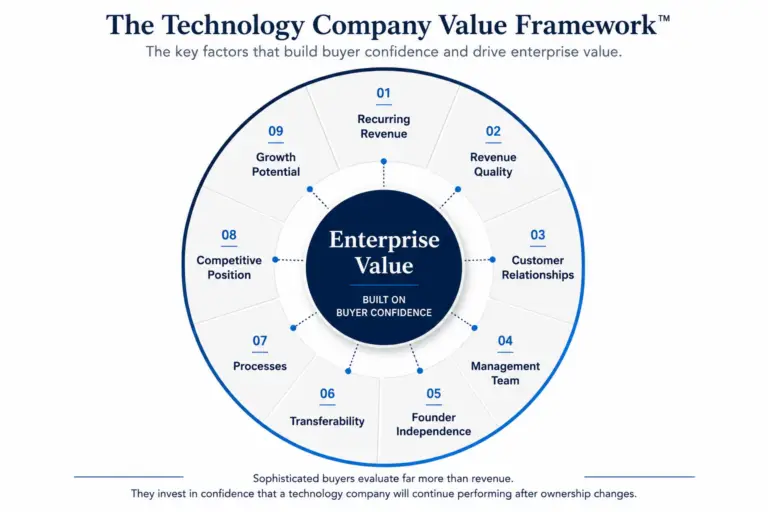
Buyers are not simply purchasing revenue, software, or customers. They are investing in their confidence that your company will continue performing after you step away.
Whether you own a software company, SaaS business, MSP, cybersecurity company, or enterprise software consulting firm, buyers are trying to answer many of the same questions.
This guide explains how sophisticated buyers evaluate technology companies, what creates value, what increases risk, and how owners can prepare long before beginning a sale process.
What You’ll Learn
This guide explores the factors that influence both valuation and deal quality, including:
- How buyers evaluate recurring revenue
- Why revenue quality matters more than revenue alone
- Founder dependence and transferability
- Customer concentration and customer retention
- Building a management team buyers trust
- Technical debt versus business debt
- Strategic buyers versus financial buyers
- Running a competitive sale process
- Due diligence and transaction preparation
- Common valuation misconceptions
The Questions Every Buyer Is Trying to Answer
Every acquisition is different.
Every buyer has different goals.
Every technology company has unique strengths and challenges.
Yet regardless of the industry, company size, or buyer type, most acquisition decisions revolve around a relatively small number of questions.
The purpose of this guide is to explain those questions from the buyer’s perspective.
Understanding how buyers think can help owners build stronger companies, prepare for future transactions, and recognize opportunities to improve value long before going to market.
Section 1: Revenue & Growth
How durable is the company’s revenue?
Can growth continue?
Articles
Coming soon
- Buyers Don’t Pay for Revenue. They Pay for Confidence.
- Revenue Quality vs Revenue Quantity.
- Why Recurring Revenue Isn’t Always Recurring.
- Growth Buyers Believe.
Section 2: Risk & Transferability
Can this company succeed without the founder?
Articles
Coming soon
- Founder Dependence.
- Technical Debt vs Business Debt.
- Customer Concentration.
- Key Employee Risk.
- Building a Transferable Company.
Section 3: Strategy & Valuation
Why different buyers value the same company differently.
Articles
Coming soon
- Strategic vs Financial Buyers.
- Why Strong Companies Receive Weak Offers.
- Valuation Is About Confidence.
- Understanding Deal Structure.
Section 4: Preparing for a Sale
How owners prepare years before beginning a transaction.
Articles
Coming soon
- Preparing for Due Diligence.
- Building Better Financial Reporting.
- Running a Competitive Process.
- Common Seller Mistakes.
Closing Section: Why This Matters
Many owners spend years improving their products, serving customers, and growing revenue.
Far fewer spend time understanding how buyers evaluate technology companies.
That difference matters.
The strongest acquisition outcomes are rarely driven by one exceptional meeting or one interested buyer. They result from building a company that buyers can understand, trust, and confidently operate after the founder transitions.
Whether you expect to sell next year or ten years from now, understanding how buyers think can help you make better decisions today.
As new articles are published, this guide will continue to expand with practical insights drawn from real technology company transactions and the questions buyers ask throughout the acquisition process.
Thinking of Selling Your Technology Company?